Walk into almost any shop, or scroll through any shopping site, and you’ll see the word “Handmade” everywhere. On bags, on cushion covers, on sarees, even on things that clearly came off a machine.
The more I see it, the more one thought stays with me. If everything is handmade, then nothing is.
The word “handmade” has lost its meaning
I’ve worked with craft, couture and export for more than 12 years. In that time I’ve seen “handmade” go from a mark of pride to a sticker that goes on almost anything. You’ll find it on mass-produced bags, on printed sarees and on products that never touched a loom.
So buyers have stopped trusting the word, and I don’t blame them. When a real handwoven piece and a factory copy carry the same label, the buyer can’t tell them apart. Most of the time they’ll pick the cheaper one.
What real handwork actually takes
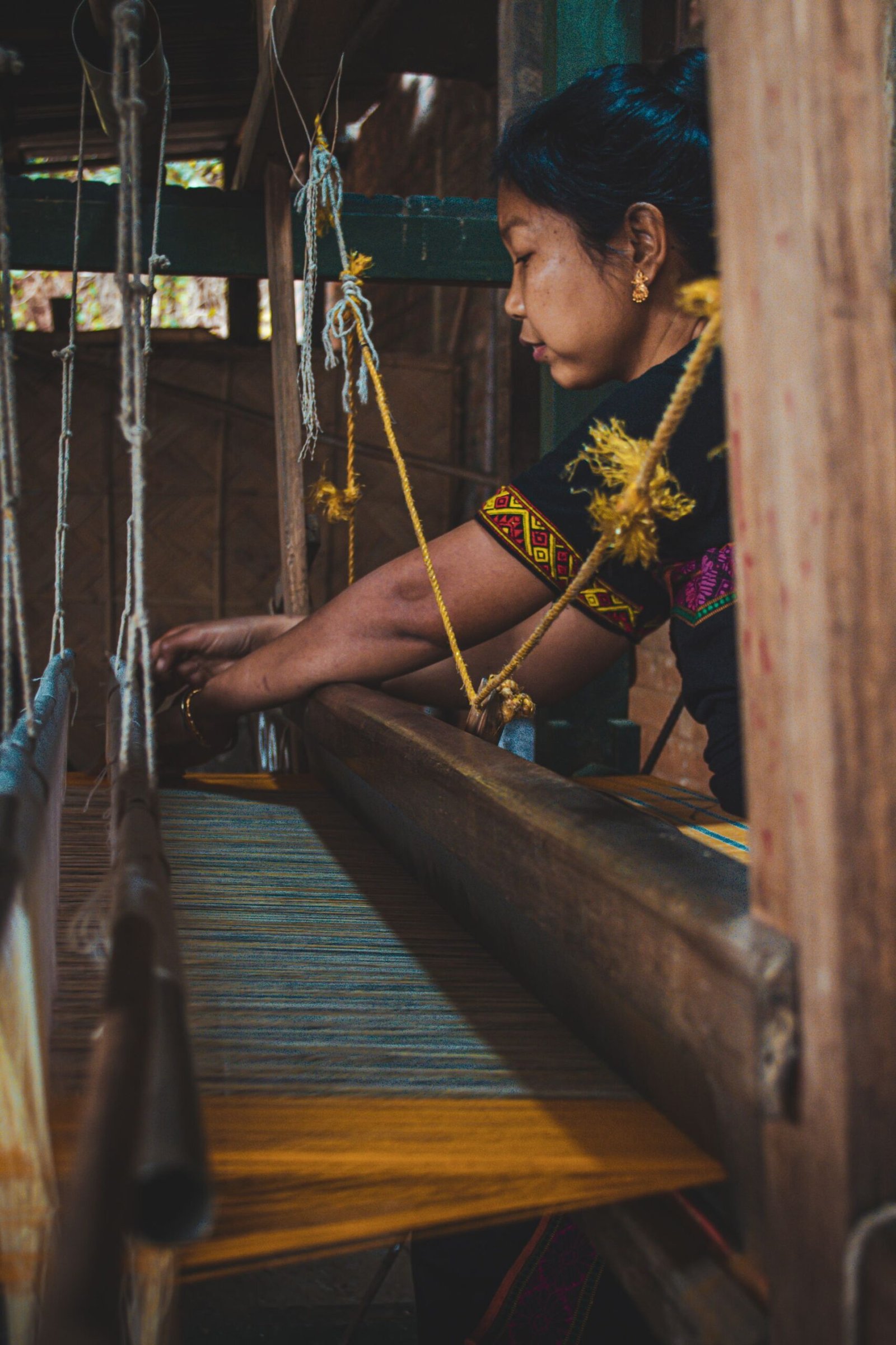
Anyone who has sat next to a weaver knows how much goes into one piece. There are days of setting up the loom, counting threads, and fixing small mistakes nobody else will notice. The skill took years to learn, often passed from mother to daughter.
None of that shows up in the word “handmade.” The word hides the person.
Luxury figured this out long ago
Look at how some big luxury houses talk about their products. They don’t stop at “made by hand.” They tell you that one artisan made the bag from start to finish, how long training takes, and which workshop it came from.
That story is a big part of why people pay what they pay. The product isn’t just leather or silk. It’s someone’s skill and time.
Our craft has the same depth, often more. We just don’t tell it.
Why naming the maker matters
When a product says who made it, three things change.
The buyer trusts it. A name and a place are hard to fake. “Handmade” is easy to print. “Woven by a weaver in Majuli over two weeks” is a different promise.
The product feels worth more. People don’t mind paying more when they know where the money goes and whose hands made the thing.
The maker gets seen. Most craftspeople in India stay invisible. The brand gets the credit and the margin. Putting their name on the product gives them recognition, and it gives them a stronger case for fair pay.
It’s not always simple
Being honest, there are real problems here.
Some makers may not want their name or photo out there. Some brands worry that a buyer will skip them and go straight to the weaver. And collecting stories takes time and effort that small brands may not have.
These are fair concerns. But I don’t think any of them are reasons to do nothing. Consent can be asked for. Stories can be shared in a way that protects the maker. And a brand that is honest about its makers usually earns more loyalty, not less.
Small steps any craft brand can take
You don’t need a big budget to start.
- A small maker card inside the box, with a first name, village and how long the piece took
- One line on the product tag about the technique and region
- A short “who made this” section on the product page
- A photo of hands at work, if the maker is comfortable with it
- Tell the story at the cluster level when a single name isn’t possible (“woven by Mishing weavers in Majuli”)
None of this is hard. It just needs someone to care enough to do it.
Where I stand
I teach design students who will one day build brands of their own. What I tell them is simple: don’t hide the people behind your product. Their story is your story.
“Handmade” was a good word once. Now it needs a name next to it.
What do you think? Would you pay more for a piece if you knew who made it? I’d like to hear your view in the comments.