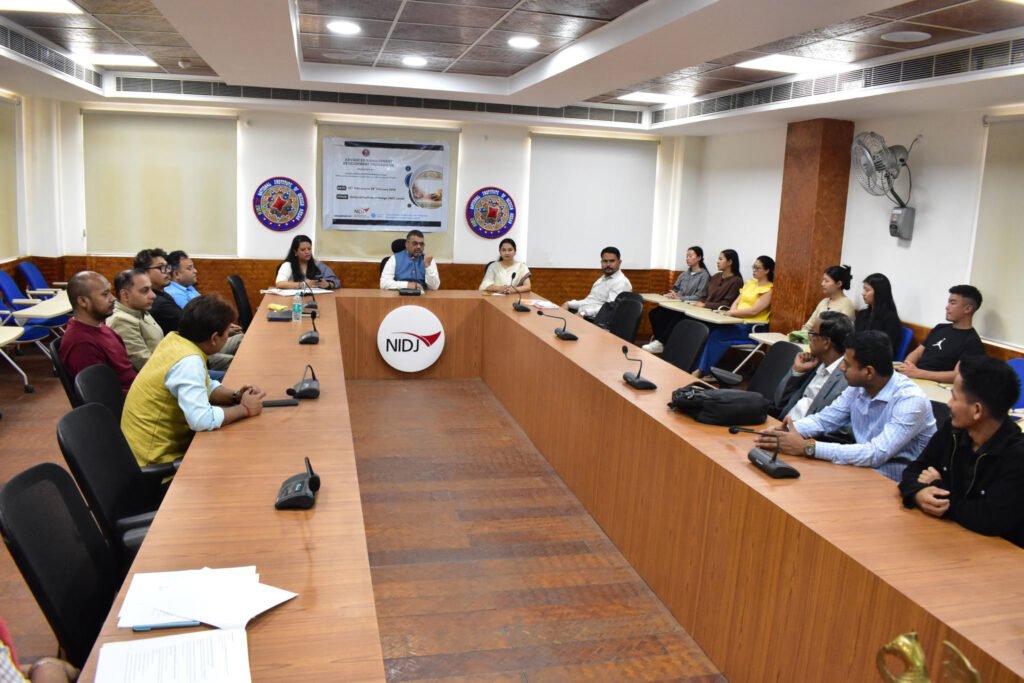
Recently, I had the opportunity to be a speaker at the Advanced Management Development Programme (AMDP) on the theme “Handloom and Handicrafts Ecosystem of Northeast India.” The Programme was organized through a collaboration between the North Eastern Handicrafts and Handlooms Development Corporation Ltd and the National Institute of Design Jorhat.
It was a meaningful experience to be part of this initiative and to engage in conversations about the future of the handloom and handicrafts sector in the Northeast. Representing National Institute of Design Assam, I had the chance to share my thoughts and experiences on how this ecosystem works and why it is so important for the region.
The Northeast has always had a deep relationship with crafts and textiles. In many parts of the region, weaving and craft making are not separate professions but part of everyday life. A loom inside the house, yarn being prepared in the courtyard, or bamboo being shaped into useful objects are things one can easily come across in villages. These practices are closely connected to culture, identity and the way communities live.
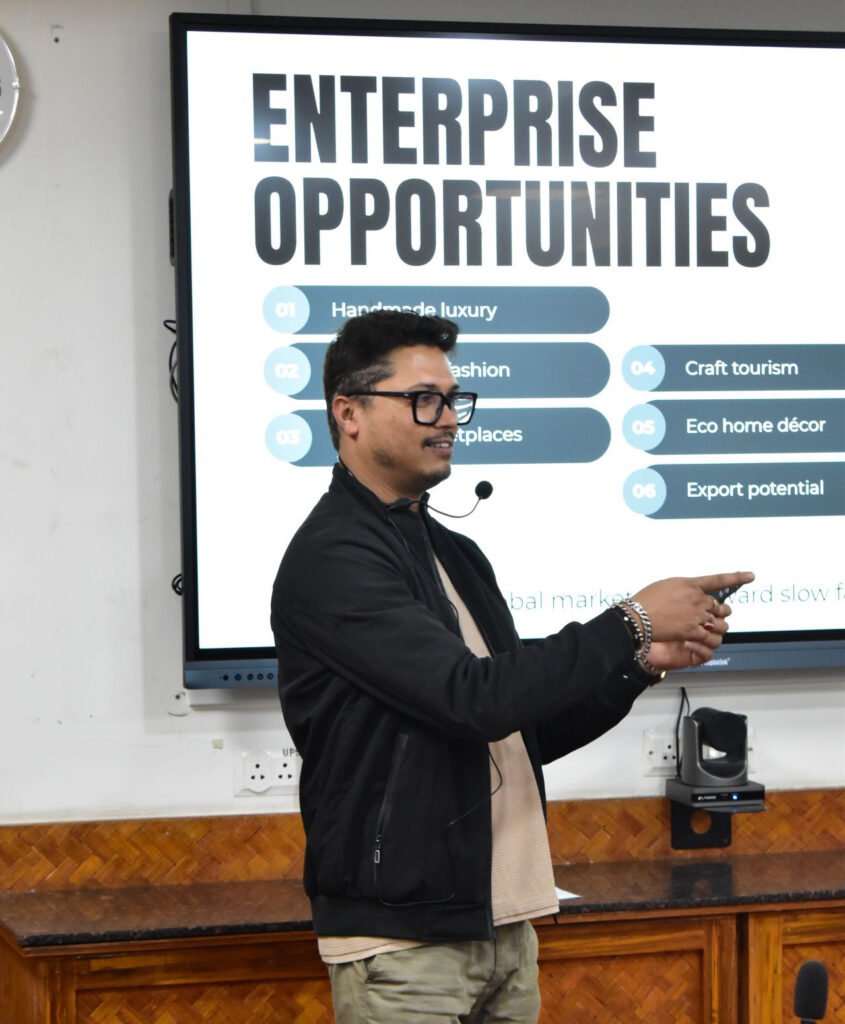
During my session in the Programme, I spoke about the broader ecosystem of handloom and handicrafts in Northeast India. One of the key ideas we discussed was how the sector works through a decentralized system. Unlike large factories where everything happens in one place, craft production in the Northeast is spread across homes and small clusters of artisans. Skills are passed from one generation to the next, and production remains closely tied to local traditions.
We also discussed how the value chain works. A lot of effort goes into the making of a product — from sourcing raw materials to weaving or crafting. However, many artisans are mainly involved in the production stage while the later stages such as branding, marketing and retail are often handled by intermediaries. Because of this, the actual producers do not always receive the full value of their work. Understanding this gap is important if we want to make the sector stronger and more sustainable.
Another interesting part of the discussion was about the opportunities that exist today. Across the world there is growing interest in handmade products, sustainable textiles and ethically produced goods. The traditional crafts of the Northeast naturally fit into this space. Handloom textiles, bamboo and cane crafts, and other indigenous products have the potential to reach much wider markets if the right support systems are in place.
At the same time, the Programme also highlighted the importance of collaboration between institutions. When organizations working in craft development, policy and design education come together, it creates valuable platforms for learning and exchange. The partnership between North Eastern Handicrafts and Handlooms Development Corporation Ltd and National Institute of Design Jorhat is a good example of how such collaborations can bring different perspectives together for the benefit of the sector.
For me personally, participating in this Programme was both rewarding and inspiring. It was encouraging to see participants actively engaging in discussions about how the handloom and handicrafts ecosystem of Northeast India can grow while still staying rooted in its cultural foundations.
Handloom and handicrafts in this region are not just about preserving tradition. They represent knowledge, skill and livelihoods that have developed over generations. With thoughtful support, better market connections and continued dialogue, these traditions can continue to grow and find new relevance in today’s world.
I am grateful for the opportunity to contribute to this Programme and to be part of a conversation that is so important for the future of crafts and textiles in the Northeast.