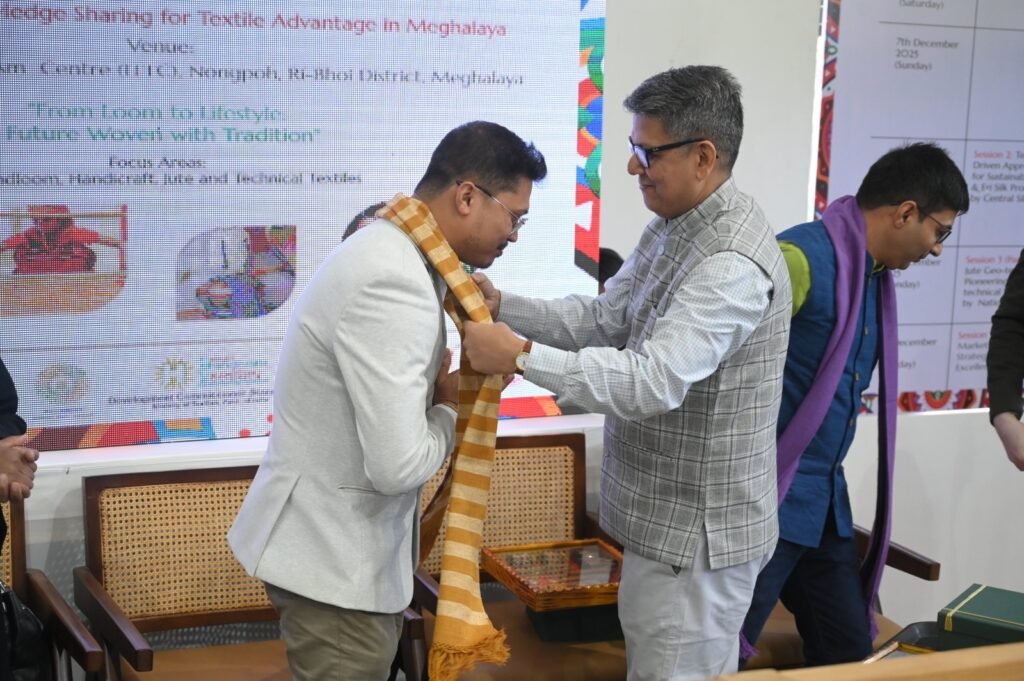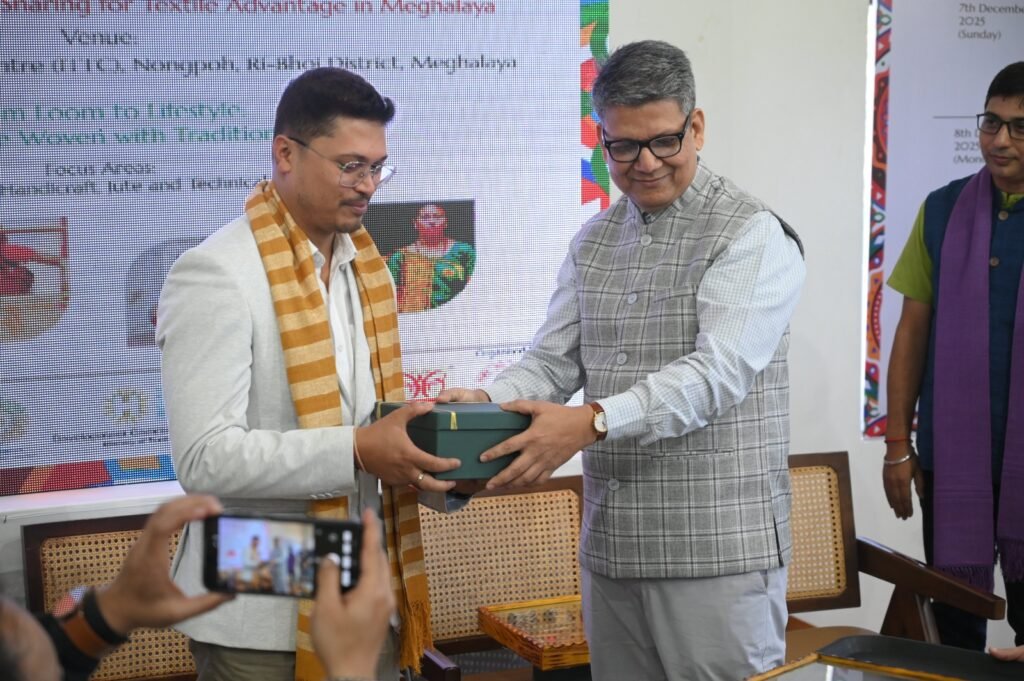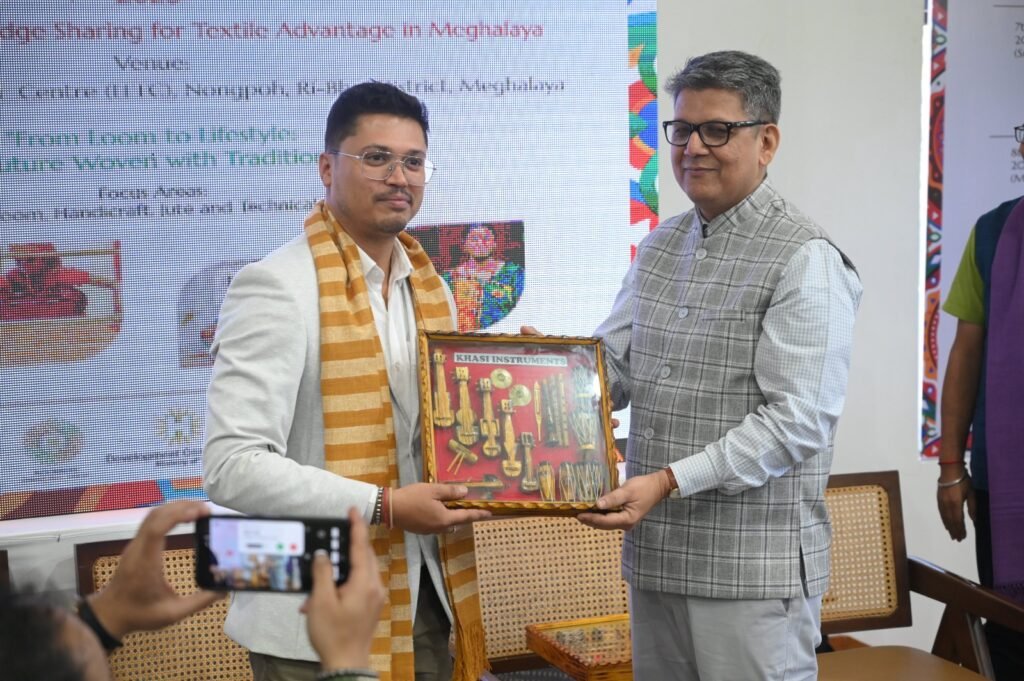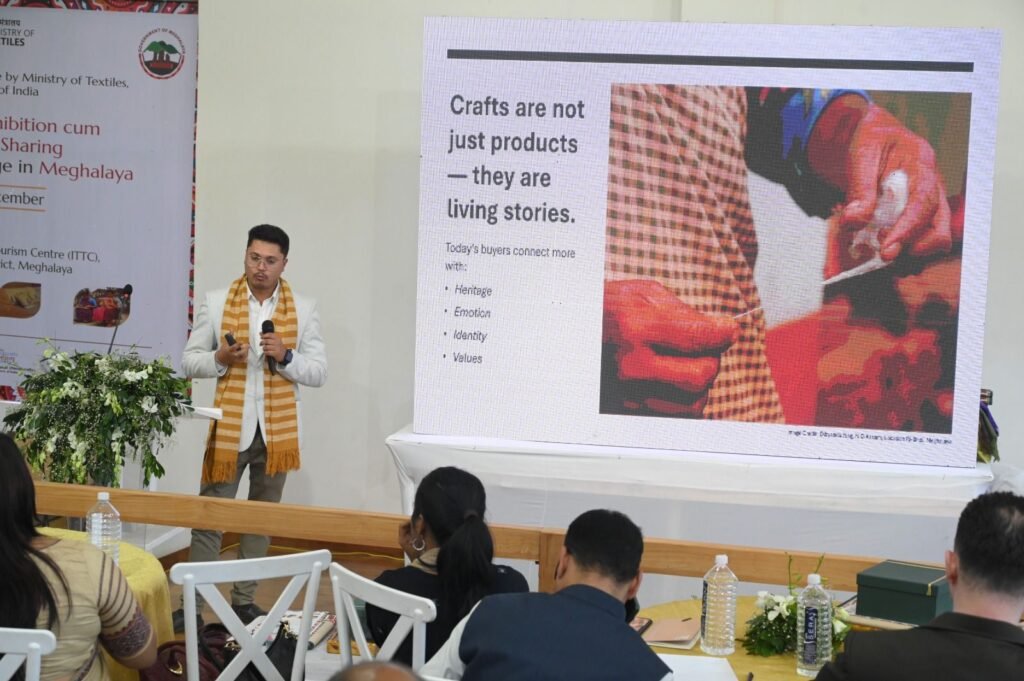
The EKTA Textile Event in Meghalaya recently brought together artisans, designers, entrepreneurs and industry stakeholders to discuss the future of India’s textile sector. Organized by the Ministry of Textiles, the event took place from 6–9 December 2025, in Nongpoh.
EKTA – which stands for Exhibition-cum-Knowledge Sharing for Textile Advantage – created a space where traditional textile knowledge could meet contemporary ideas about design, branding and markets.
I was honored to be invited as an Expert Guest and Resource Person to contribute to this initiative and share insights with participants working across different areas of the craft and textile ecosystem.
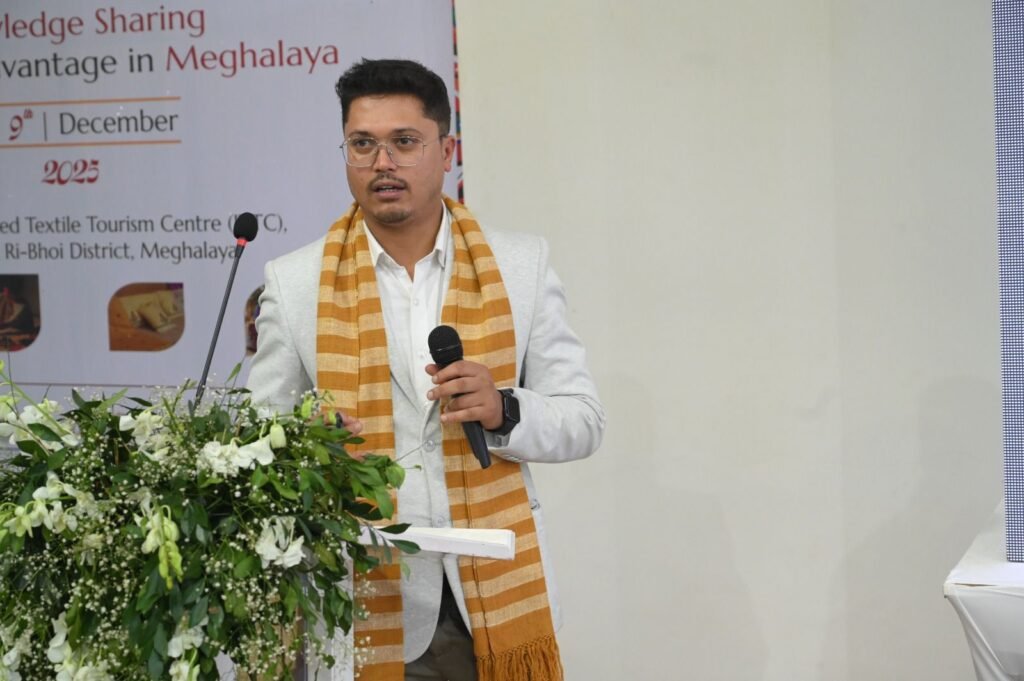
Sharing Insights on “Craft to Brand” in Textile Marketing
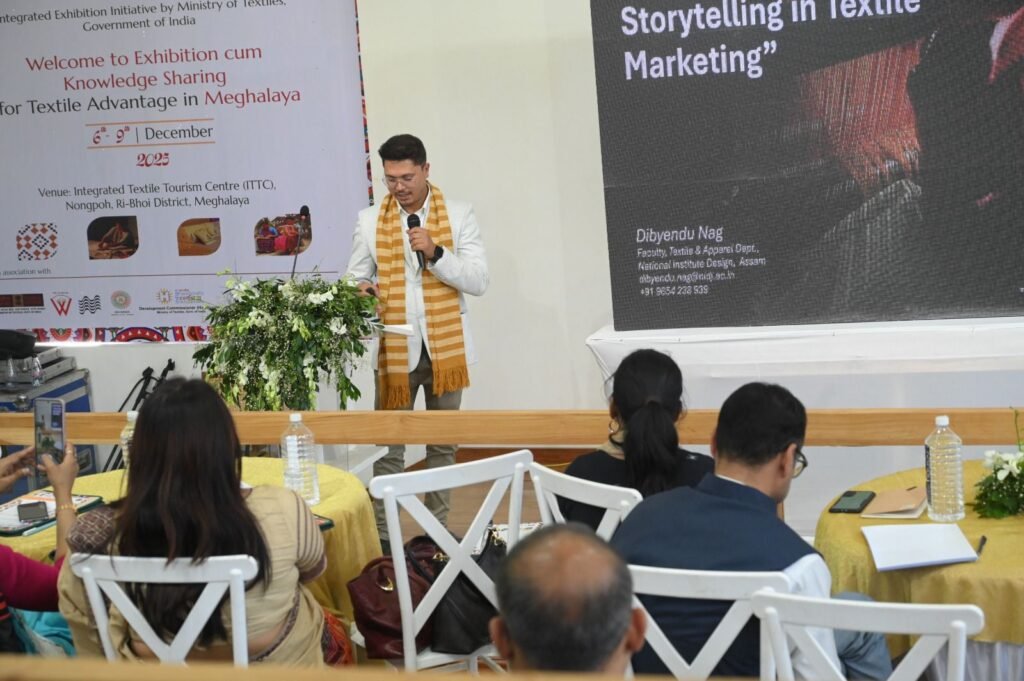
During the event, I delivered a session titled “Craft to Brand: The Art of Storytelling in Textile Marketing.”
The session focused on an important shift that the Indian handloom and handicraft sector is currently experiencing. For many years, traditional textiles were mostly sold as craft products. Today, however, there is a growing need to position them as strong and meaningful brands.
Every textile created by an artisan carries a story — about the community that makes it, the materials used and the cultural traditions behind it. These stories are powerful but are often not communicated effectively to modern consumers.
Through the session, we discussed how storytelling in textile marketing can help build stronger brand identities for craft-based enterprises. When artisans and entrepreneurs learn to communicate the narrative behind their work, it creates emotional value and helps the product stand out in a crowded market.
Why Storytelling Matters in the Handloom Sector
In today’s global market, consumers are increasingly interested in authenticity, sustainability and the human stories behind products. This shift creates new opportunities for Indian handloom and craft brands.
Storytelling helps connect traditional craft with contemporary audiences. It allows people to understand not only the product but also the culture and skill behind it.
During the discussions at the EKTA Textile Event, we explored how artisans and textile entrepreneurs can strengthen their work through:
+ Clear brand identity
+ Strong visual storytelling
+ Thoughtful design and packaging
+ Understanding changing market trends
When traditional craftsmanship is combined with design thinking and market awareness, it opens up new pathways for craft enterprises to grow.
Interaction with Artisans and Textile Entrepreneurs
One of the most meaningful parts of the event was interacting directly with artisans, designers and entrepreneurs working in the textile sector. These conversations always provide valuable insight into the realities of the craft ecosystem.
Many artisans are deeply skilled in their craft but often lack exposure to branding, marketing and digital platforms. Events like EKTA help bridge this gap by creating opportunities for knowledge sharing and collaboration.
Participants were able to exchange ideas, learn from each other and explore ways to strengthen the connection between traditional textile production and modern markets.
The Importance of Platforms Like EKTA
The EKTA textile Programme plays an important role in strengthening the handloom and handicraft sector in India. By bringing together government institutions, designers, educators and artisans, it creates a space for dialogue and learning.
Initiatives like this help build stronger connections between traditional craft practices and contemporary design innovation. They also highlight the importance of supporting artisans not only as producers but as creative entrepreneurs.
Looking Ahead
The future of the Indian handloom and handicraft sector depends on how well tradition can connect with modern markets.
Design education, storytelling, branding and digital platforms are becoming increasingly important tools for artisans and craft entrepreneurs. When these elements come together, they help transform craft practices into sustainable and recognizable brands.
I am grateful to the Weavers Service Centre Guwahati and the Ministry of Textiles for inviting me to be part of this initiative. It was a valuable experience to interact with such a diverse group of participants and contribute to conversations about the future of India’s textile ecosystem.
I look forward to many more opportunities to engage with artisans, designers and institutions working to strengthen the rich tradition of Indian textiles.